What is the sin of greed?
Greed, also called avarice or covetousness, is an excessive desire for wealth or possessions. It is not just wanting things; it is wanting more than you need, at the cost of fairness to others or of your own peace.
Aquinas described greed as a sin against your neighbour, because one person cannot have too much of the world's goods without someone else having too little. It shows up both in grasping for more and in refusing to let go of what you have.
Ambition, saving and providing for your family are good. Greed starts when getting and keeping becomes the goal in itself, and other people become a means to it.
Signs of greed in everyday life
- Feeling that you never have quite enough, whatever you have.
- Finding it hard to share, lend or give away.
- Measuring people, including yourself, by what they own or earn.
- Bending rules for a better deal.
- Worrying about money far beyond what your situation calls for.
Greed vs ambition
Ambition has a goal. Greed only has a direction: more.
Greed
Wants more for its own sake, never reaches “enough”, and is willing to take from others to get it.
Ambition
Wants to build or achieve something specific, and can stop, share or change course once it is done.
What the Bible says about greed
The Bible does not contain the list of seven deadly sins, but it speaks about greed directly. These verses are from the King James Version. See the 7 deadly sins in the Bible for the full picture.
“For the love of money is the root of all evil.”
1 Timothy 6:10
“Take heed, and beware of covetousness: for a man's life consisteth not in the abundance of the things which he possesseth.”
Luke 12:15
“Let your conversation be without covetousness; and be content with such things as ye have.”
Hebrews 13:5
Famous examples of greed
King Midas
In Greek myth, Midas wishes that everything he touches turns to gold, then cannot eat, drink or hold his daughter.
Ebenezer Scrooge
Dickens’s A Christmas Carol (1843) made Scrooge’s name a synonym for the miser who hoards and will not give.
Judas’s thirty pieces of silver
In the Gospel of Matthew, Judas betrays Jesus for thirty pieces of silver, the Bible’s best-known image of greed.
The opposite of greed: Charity
Charity (Caritas) is the contrary virtue of greed. Charity, also called generosity or liberality, is the free giving of what you have, without counting the return.
It is one of the seven heavenly virtues, each paired with one of the deadly sins.
Symbols of greed
- Animals: Toad and Frog. Associations vary between sources; these are the most common in medieval art and later lists.
- Colour: Yellow, in the modern colour scheme for the seven sins.
- Demon: Mammon, in Peter Binsfeld's 1589 classification. See the 7 demons.
- In Dante: Fifth terrace: the greedy lie face down on the ground, bound, because they fixed their eyes on earthly things.
Greed in Bruegel's engraving
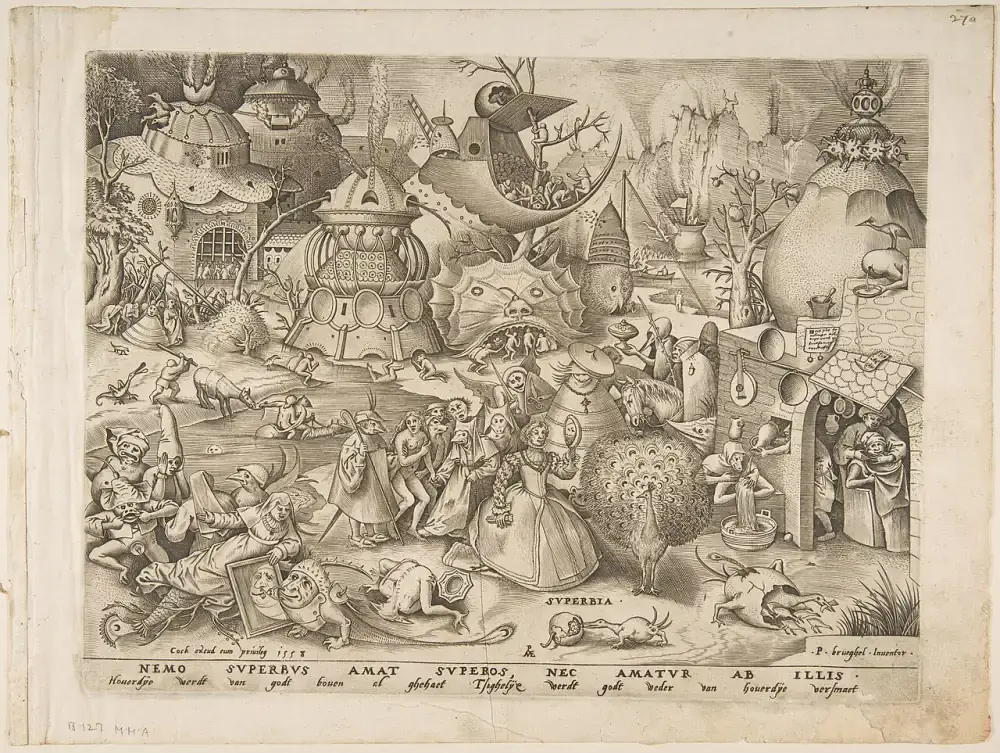
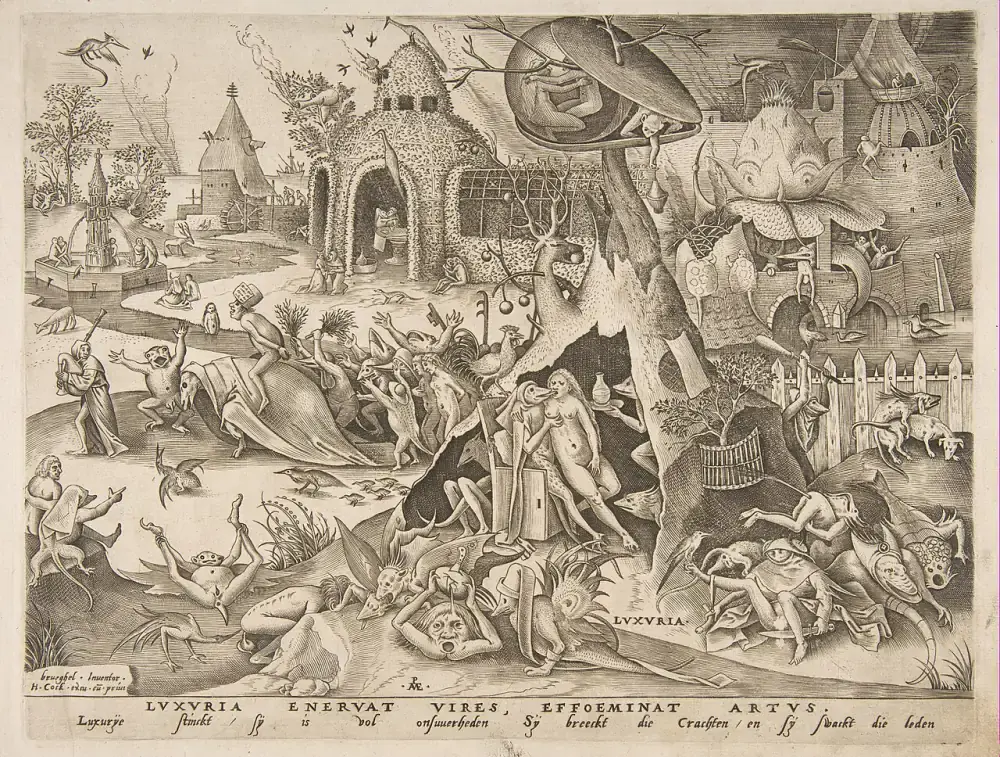
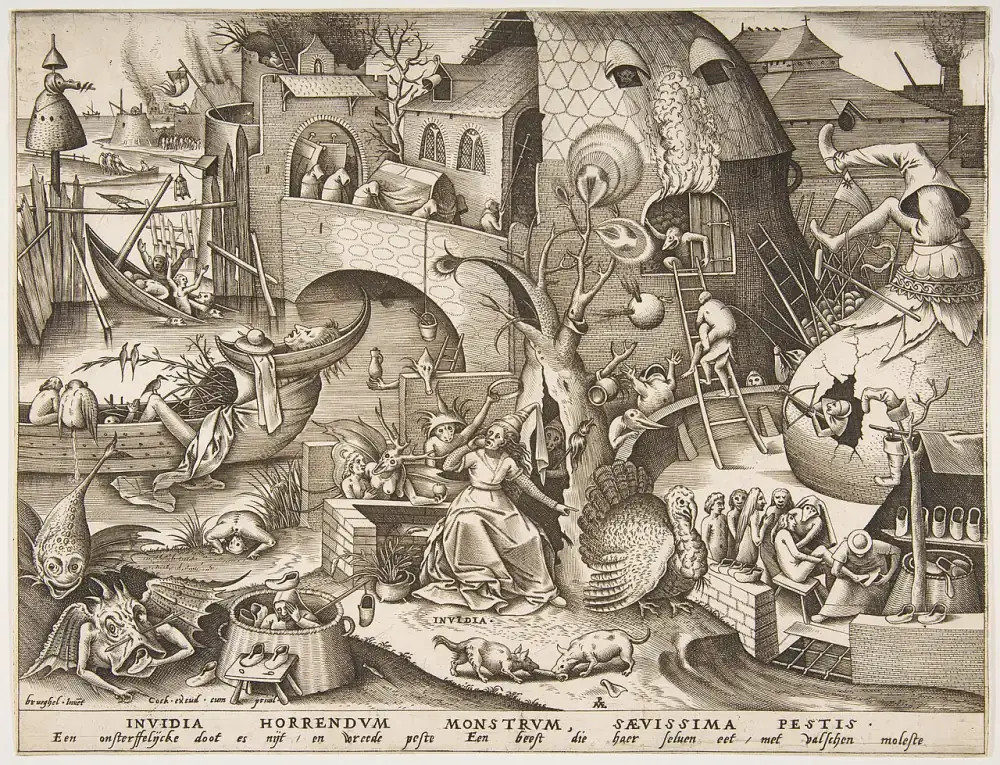
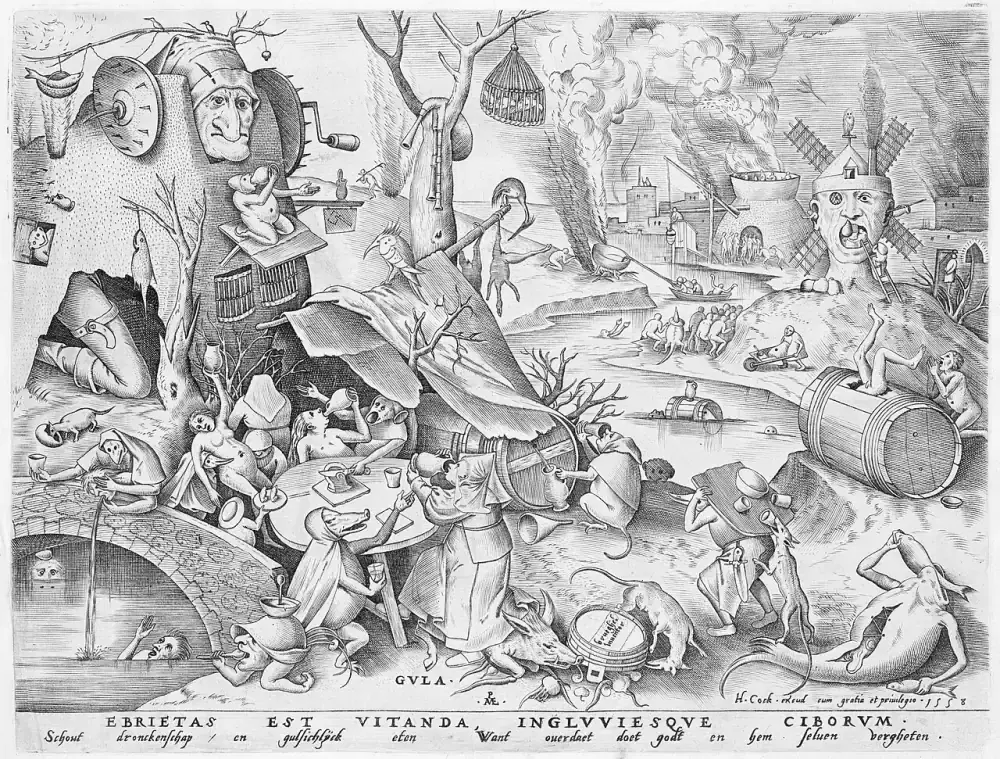
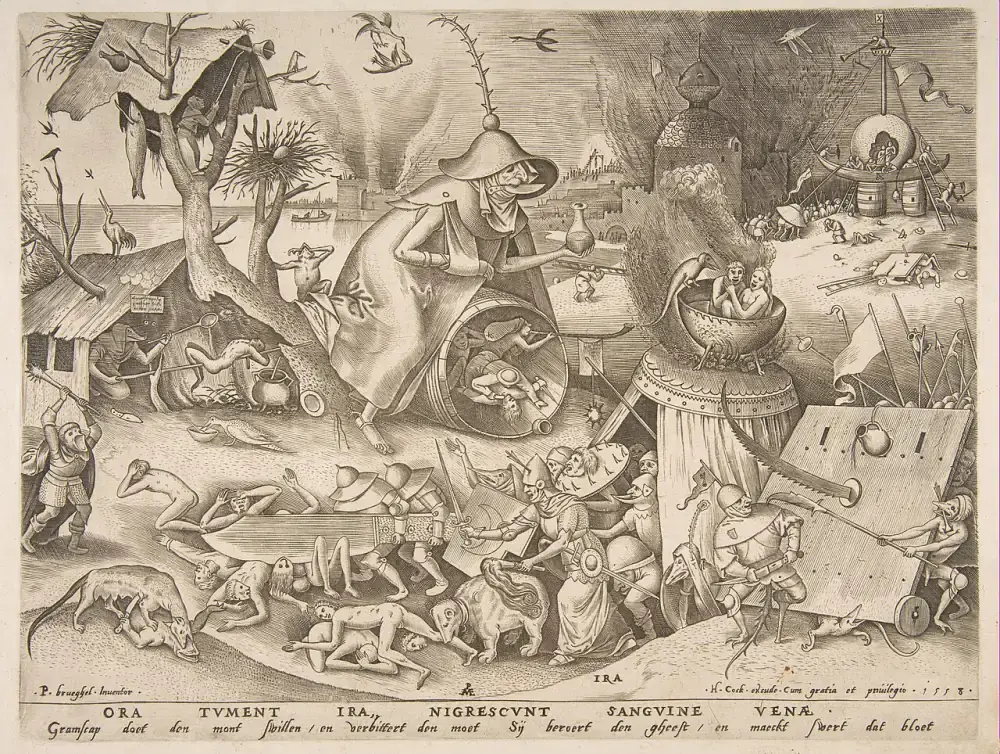
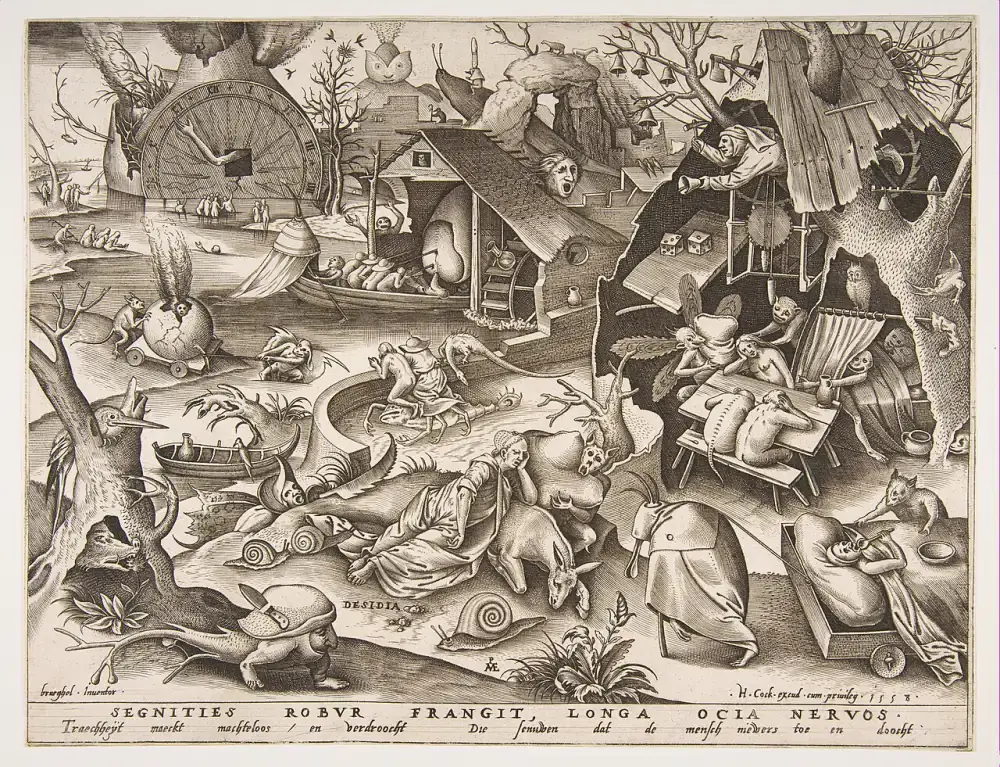
Pieter Bruegel the Elder gave each sin its own crowded print in 1558. Here a woman personifying greed stands at the centre, surrounded by figures acting it out.
All seven side by side, with Bosch's painting of the sins: the seven deadly sins in art.
How to work on greed
- Give something away regularly, on a schedule, before you feel ready.
- Decide in advance what "enough" means for one area of spending.
- Notice when you compare what you own with what others own.