What is the sin of wrath?
Wrath is uncontrolled anger: rage, hatred or the wish for revenge. Anger itself is not the sin; anger at real injustice can be right. Wrath is anger that is out of proportion, aimed at the wrong person, or that wants to hurt rather than to fix.
Unlike most of the other sins, wrath does not have to be selfish. It can grow out of a real wrong, which is exactly what makes it easy to justify.
Anger tells you something matters. Righteous anger at injustice can drive real change. It becomes wrath when it wants revenge more than repair.
Signs of wrath in everyday life
- Snapping at people and regretting it later.
- Replaying arguments in your head for days.
- Wanting the other person to suffer, not just to apologise.
- Holding grudges long after the event.
- Getting angry at things that cannot be changed.
Wrath vs anger
Anger says “this is wrong”. Wrath says “you will pay”.
Wrath
Wants to punish or get even, is out of proportion to the wrong, and does not let go.
Anger
A normal response to a real wrong. Healthy anger names the problem and wants it fixed, then settles.
What the Bible says about wrath
The Bible does not contain the list of seven deadly sins, but it speaks about wrath directly. These verses are from the King James Version. See the 7 deadly sins in the Bible for the full picture.
“Be ye angry, and sin not: let not the sun go down upon your wrath.”
Ephesians 4:26
“Let every man be swift to hear, slow to speak, slow to wrath: for the wrath of man worketh not the righteousness of God.”
James 1:19-20
“A soft answer turneth away wrath: but grievous words stir up anger.”
Proverbs 15:1
Famous examples of wrath
The wrath of Achilles
Homer’s Iliad opens by naming its subject: the rage of Achilles, which costs the Greeks countless lives.
Captain Ahab
In Moby-Dick (1851), Ahab’s fury at the whale that took his leg destroys his ship and almost all his crew.
Moses strikes the rock
In Numbers 20, Moses strikes the rock in anger instead of speaking to it, and is barred from the Promised Land.
The opposite of wrath: Patience
Patience (Patientia) is the contrary virtue of wrath. Patience is the strength to bear wrongs calmly and to forgive, without pretending the wrong did not happen.
It is one of the seven heavenly virtues, each paired with one of the deadly sins.
Symbols of wrath
- Animals: Bear and Wolf. Associations vary between sources; these are the most common in medieval art and later lists.
- Colour: Red, in the modern colour scheme for the seven sins.
- Demon: Satan, in Peter Binsfeld's 1589 classification. See the 7 demons.
- In Dante: Third terrace: the wrathful walk through thick, blinding smoke, as their anger once blinded them.
Wrath in Bruegel's engraving
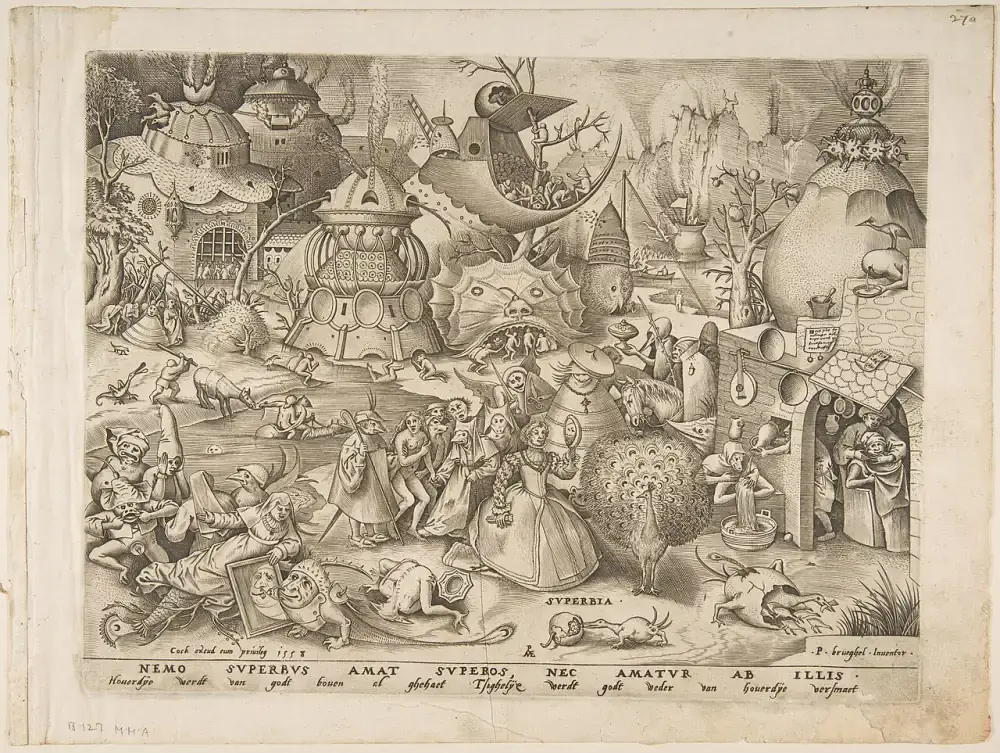
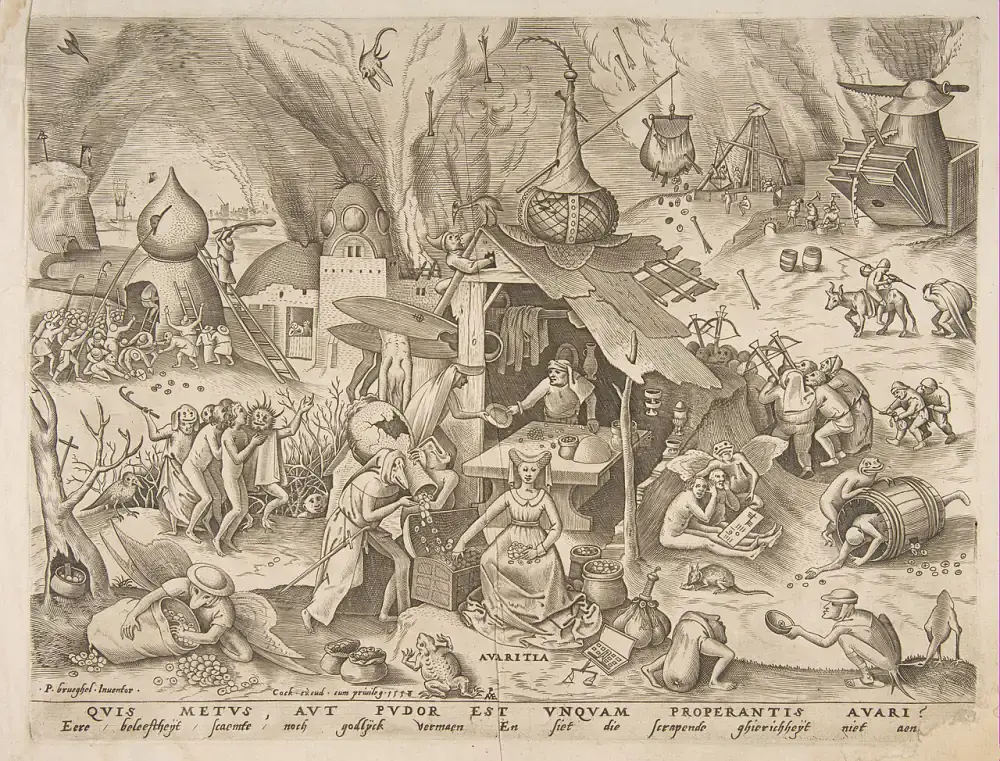
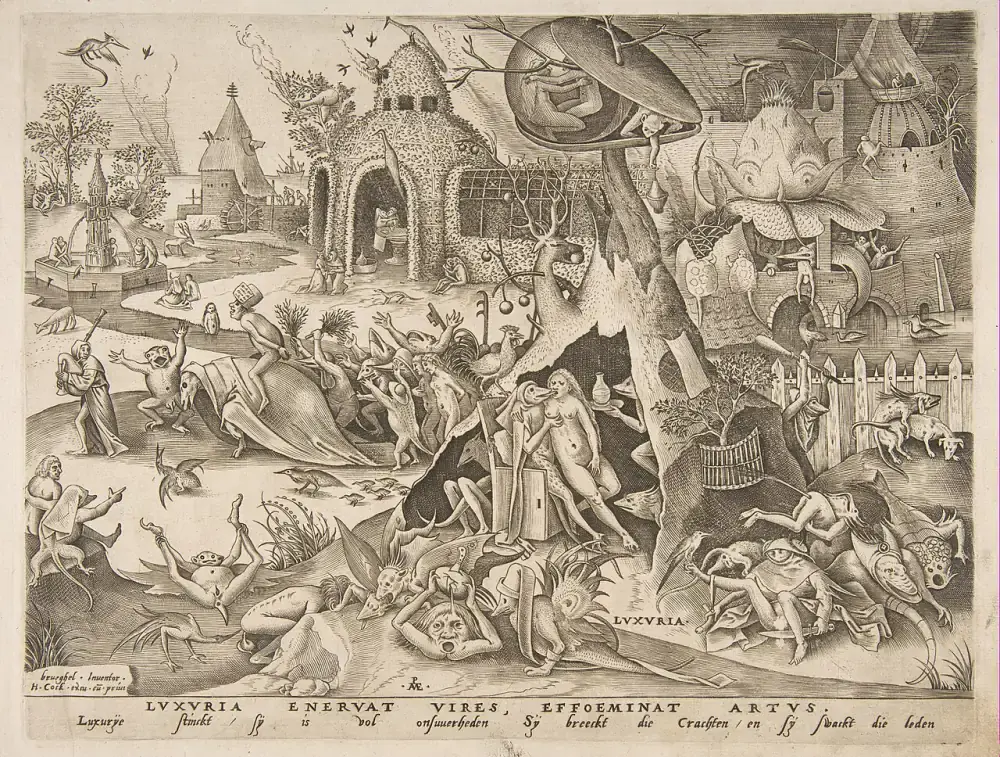
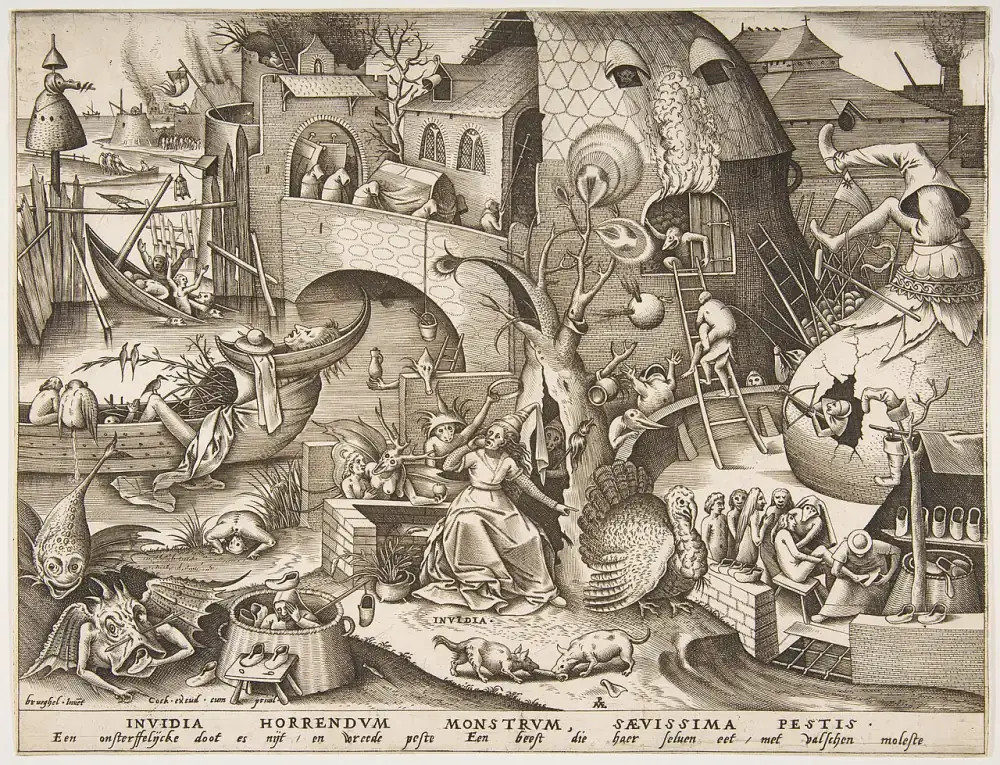
Pieter Bruegel the Elder gave each sin its own crowded print in 1558. Here a woman personifying wrath stands at the centre, surrounded by figures acting it out.
All seven side by side, with Bosch's painting of the sins: the seven deadly sins in art.
How to work on wrath
- Wait a full breath, or a full day, before replying to something that made you angry.
- Say what you need instead of what the other person did wrong.
- Choose one old grudge and decide to stop feeding it.