What is the sin of lust?
Lust is intense or uncontrolled desire, most often sexual. In the traditional sense it is desire that has come loose from love: it treats another person as something to be used rather than someone to be cared for.
The Latin name, luxuria, also meant excess and extravagance in general, which is why some older lists apply lust to any craving that takes over your judgement.
Desire and attraction are a normal, good part of being human. The sin lies in desire that disregards the other person or your own commitments.
Signs of lust in everyday life
- Letting attraction decide things your judgement would not.
- Seeing people mainly in terms of how they look.
- Chasing the next thrill once the last one fades.
- Finding it hard to stop once something feels good.
- Keeping secrets about what you want.
Lust vs love
Love wants the person. Lust wants something from the person.
Lust
Focuses on what the other person can give you, here and now. Fades once the desire is met.
Love
Focuses on the other person’s good, includes desire but outlasts it, and keeps its commitments.
What the Bible says about lust
The Bible does not contain the list of seven deadly sins, but it speaks about lust directly. These verses are from the King James Version. See the 7 deadly sins in the Bible for the full picture.
“Whosoever looketh on a woman to lust after her hath committed adultery with her already in his heart.”
Matthew 5:28
“Flee fornication. Every sin that a man doeth is without the body; but he that committeth fornication sinneth against his own body.”
1 Corinthians 6:18
“For all that is in the world, the lust of the flesh, and the lust of the eyes, and the pride of life, is not of the Father, but is of the world.”
1 John 2:16
Famous examples of lust
David and Bathsheba
In 2 Samuel 11, King David sees Bathsheba bathing, takes her, and arranges her husband’s death to hide it.
Paolo and Francesca
In Dante’s Inferno (Canto V), the lovers are blown forever by a storm, as they let passion sweep them away in life.
Don Juan
The legendary seducer, from Tirso de Molina’s play to Mozart’s Don Giovanni, is dragged to hell still refusing to repent.
The opposite of lust: Chastity
Chastity (Castitas) is the contrary virtue of lust. Chastity, in its broad sense, is self-control and respect in desire, not simply abstinence. It keeps desire tied to love and commitment.
It is one of the seven heavenly virtues, each paired with one of the deadly sins.
Symbols of lust
- Animals: Goat and Rooster. Associations vary between sources; these are the most common in medieval art and later lists.
- Colour: Blue, in the modern colour scheme for the seven sins.
- Demon: Asmodeus, in Peter Binsfeld's 1589 classification. See the 7 demons.
- In Dante: Seventh terrace: the lustful walk through a wall of flame, singing hymns of chastity.
Lust in Bruegel's engraving
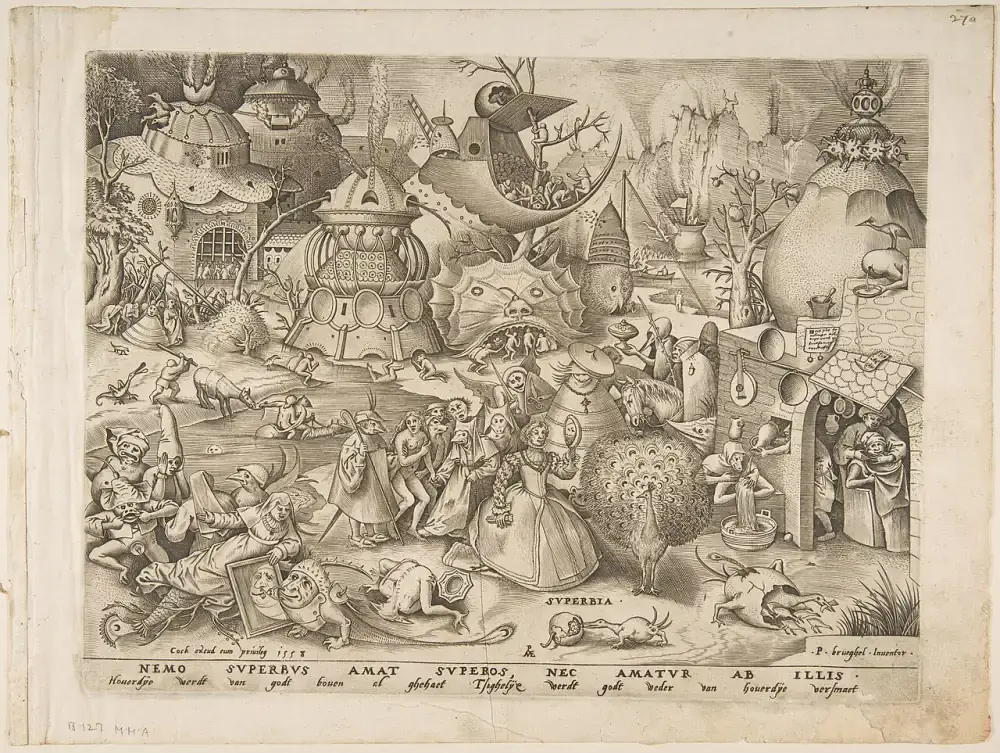
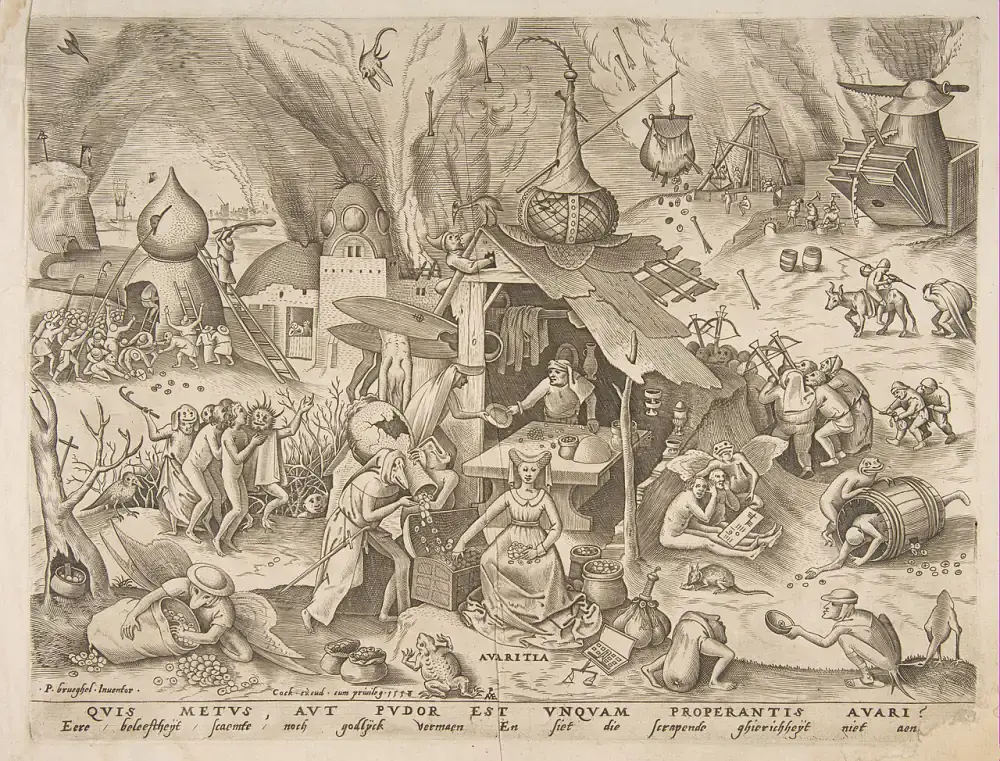
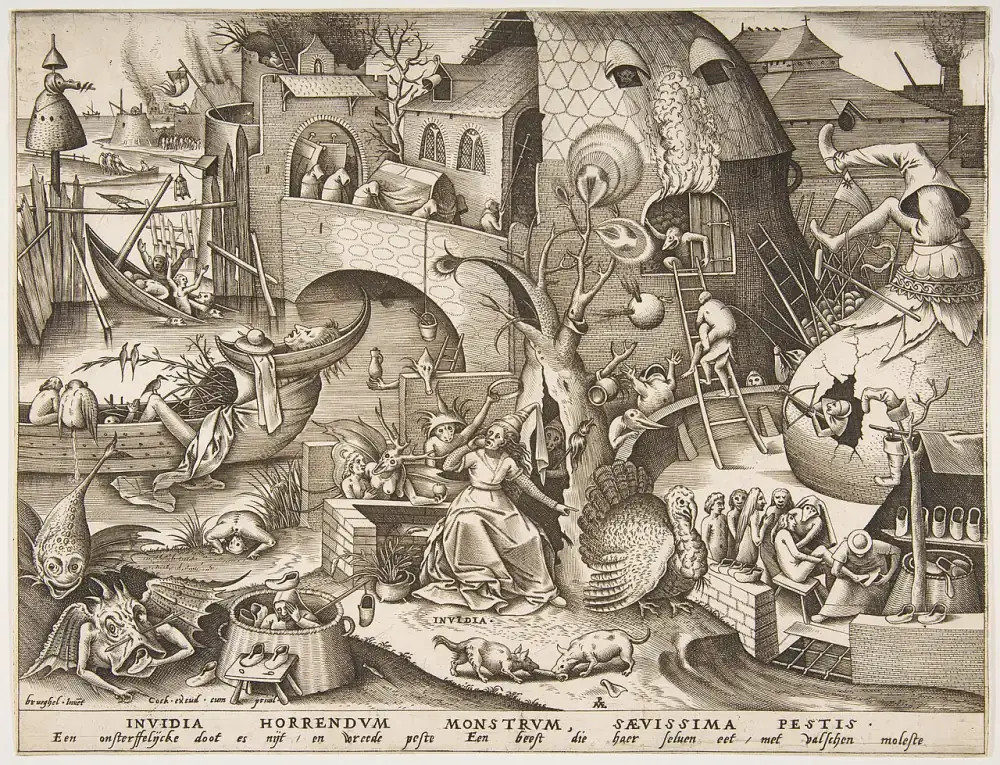
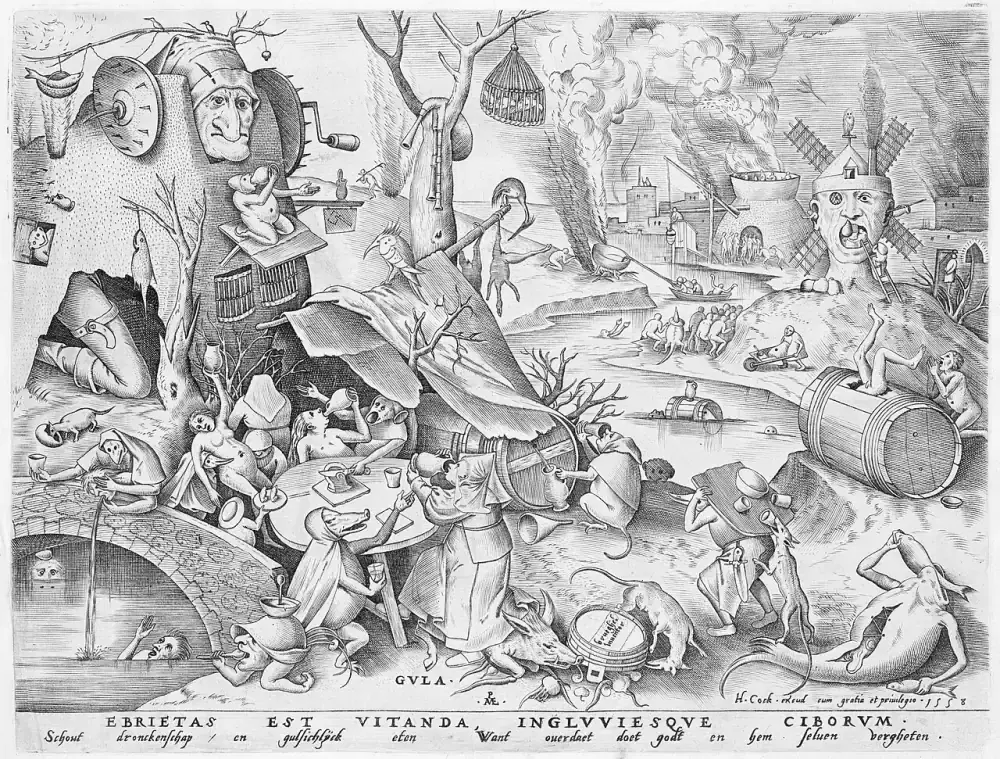
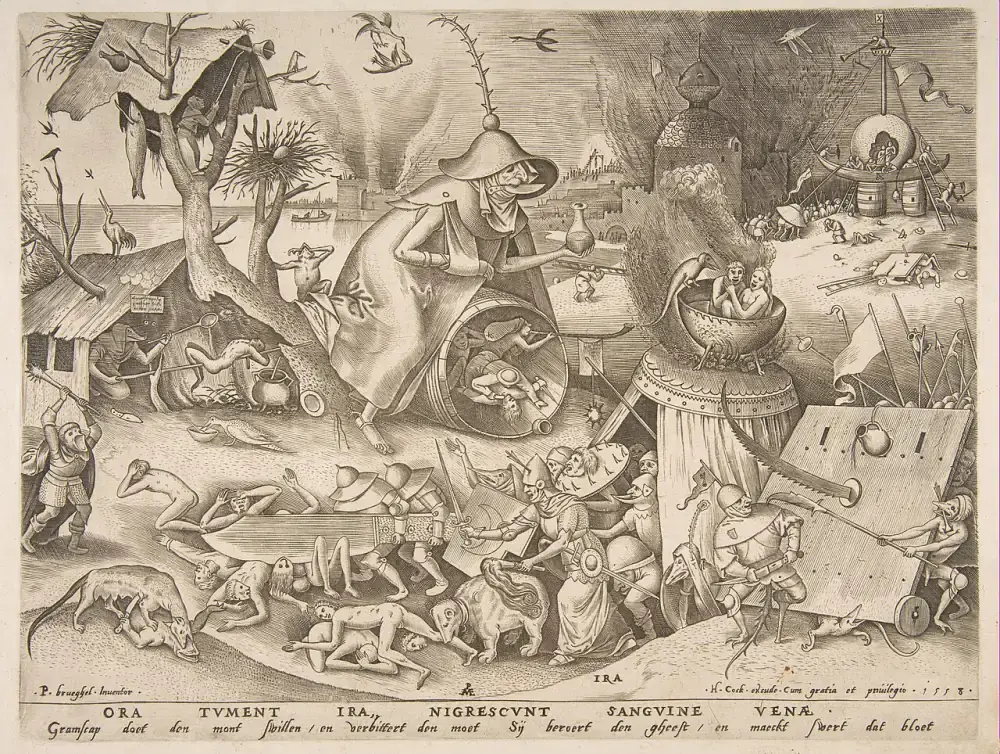
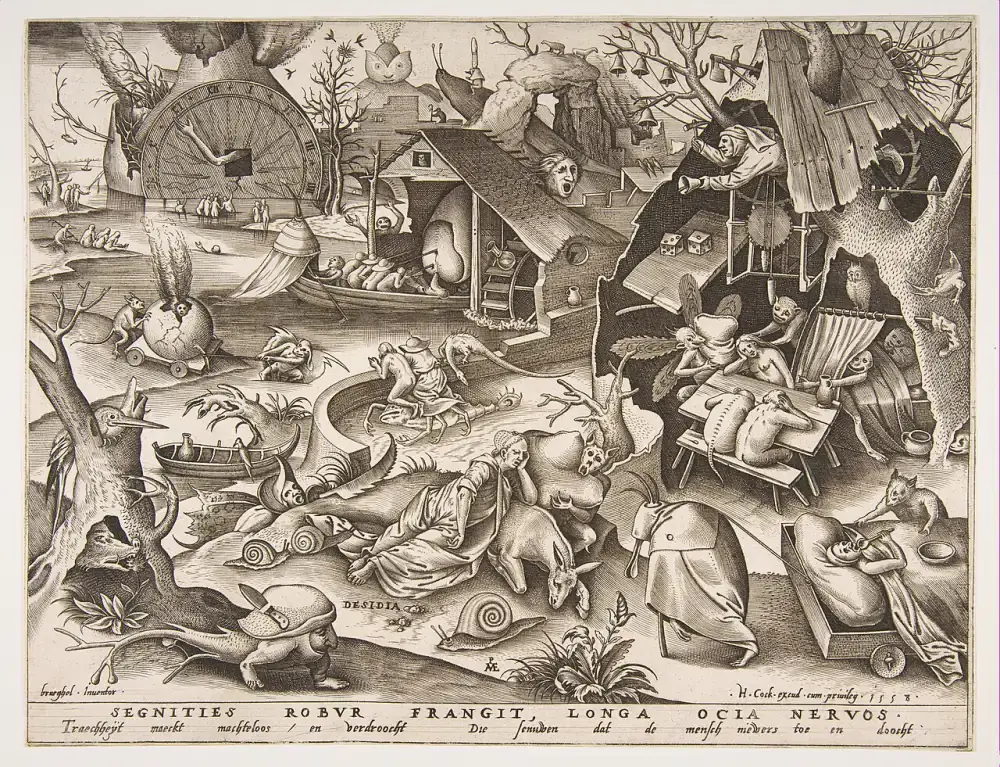
Pieter Bruegel the Elder gave each sin its own crowded print in 1558. Here a woman personifying lust stands at the centre, surrounded by figures acting it out.
All seven side by side, with Bosch's painting of the sins: the seven deadly sins in art.
How to work on lust
- Pause before acting on a strong urge and ask what you actually need.
- Practise noticing people's character before their appearance.
- Cut back on whatever keeps your cravings constantly switched on.