What is the sin of pride?
Pride, in the sense of the deadly sin, is not the healthy satisfaction of a job well done. It is an inflated view of yourself: the belief that you are better, more important or more deserving than other people, and that you owe little to anyone.
Medieval writers put it first on the list and called it the root of the others. Gregory the Great described it as the "queen of sins" because each of the remaining six can grow out of it: envy when someone outshines you, wrath when you are slighted, greed when you think you deserve more.
Self-respect, confidence and pride in good work are not the sin. The line is crossed when your worth depends on being above other people rather than on doing well.
Signs of pride in everyday life
- Struggling to say "I was wrong" or "I don't know".
- Feeling irritated when others get credit or attention.
- Steering conversations back to your own achievements.
- Dismissing advice, especially from people you think are below you.
- Needing to win arguments more than to understand them.
Pride vs self-esteem
Self-esteem says “I am enough”. Pride says “I am more than you”.
Pride
Needs to be above others. Feels threatened by other people’s success and by being corrected.
Self-esteem
Feels secure without comparing. Can admit mistakes because worth does not depend on being right.
What the Bible says about pride
The Bible does not contain the list of seven deadly sins, but it speaks about pride directly. These verses are from the King James Version. See the 7 deadly sins in the Bible for the full picture.
“Pride goeth before destruction, and an haughty spirit before a fall.”
Proverbs 16:18
“God resisteth the proud, but giveth grace unto the humble.”
James 4:6
“When pride cometh, then cometh shame: but with the lowly is wisdom.”
Proverbs 11:2
Famous examples of pride
Lucifer’s fall
Christian tradition reads Isaiah 14 (“I will be like the most High”) as the fall of an angel through pride, which is why pride heads the list.
Icarus and hubris
The Greeks called overreaching pride hubris. Icarus flies too close to the sun on wax wings and falls into the sea.
Satan in Paradise Lost
Milton’s Satan would rather “reign in Hell than serve in Heaven”, the most famous line ever written about pride.
The opposite of pride: Humility
Humility (Humilitas) is the contrary virtue of pride. Humility is seeing yourself accurately: neither above nor below others, and open to learning from anyone.
It is one of the seven heavenly virtues, each paired with one of the deadly sins.
Symbols of pride
- Animals: Peacock and Lion. Associations vary between sources; these are the most common in medieval art and later lists.
- Colour: Violet, in the modern colour scheme for the seven sins.
- Demon: Lucifer, in Peter Binsfeld's 1589 classification. See the 7 demons.
- In Dante: First terrace: the proud walk bent under heavy stones, so they cannot look down on anyone.
Pride in Bruegel's engraving
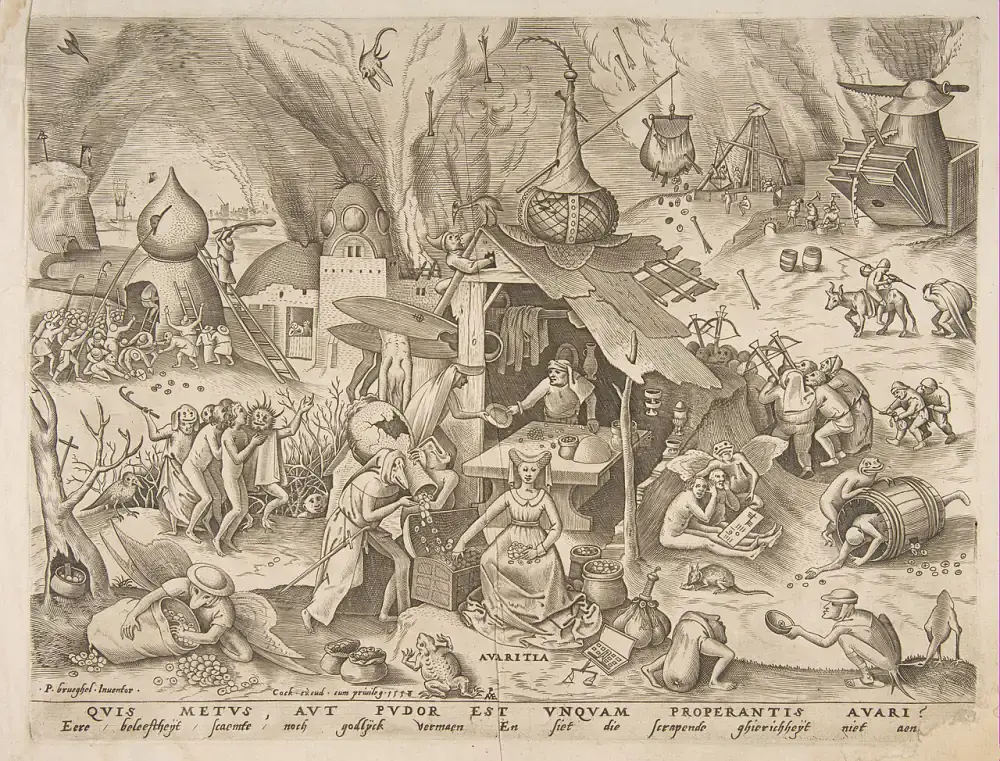
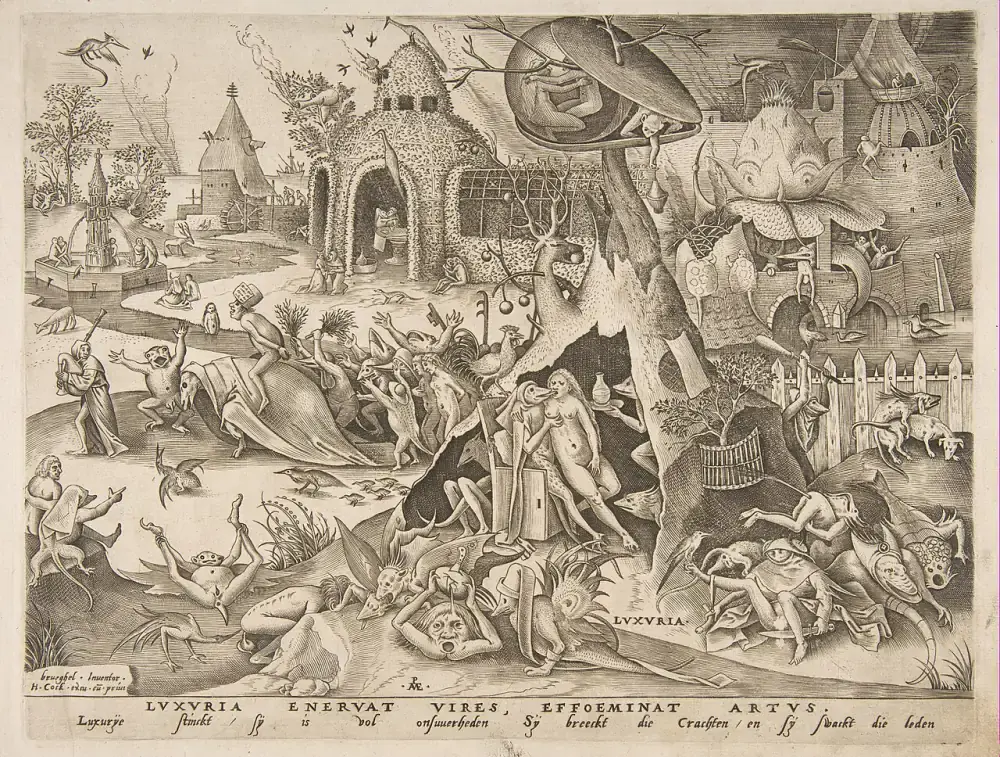
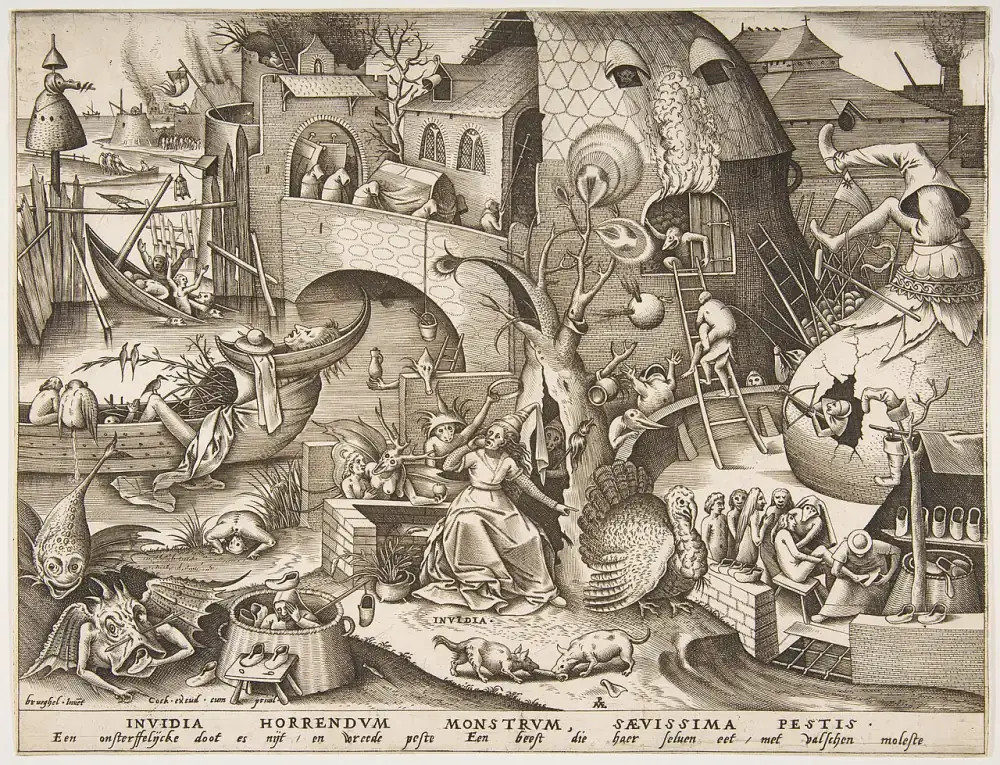
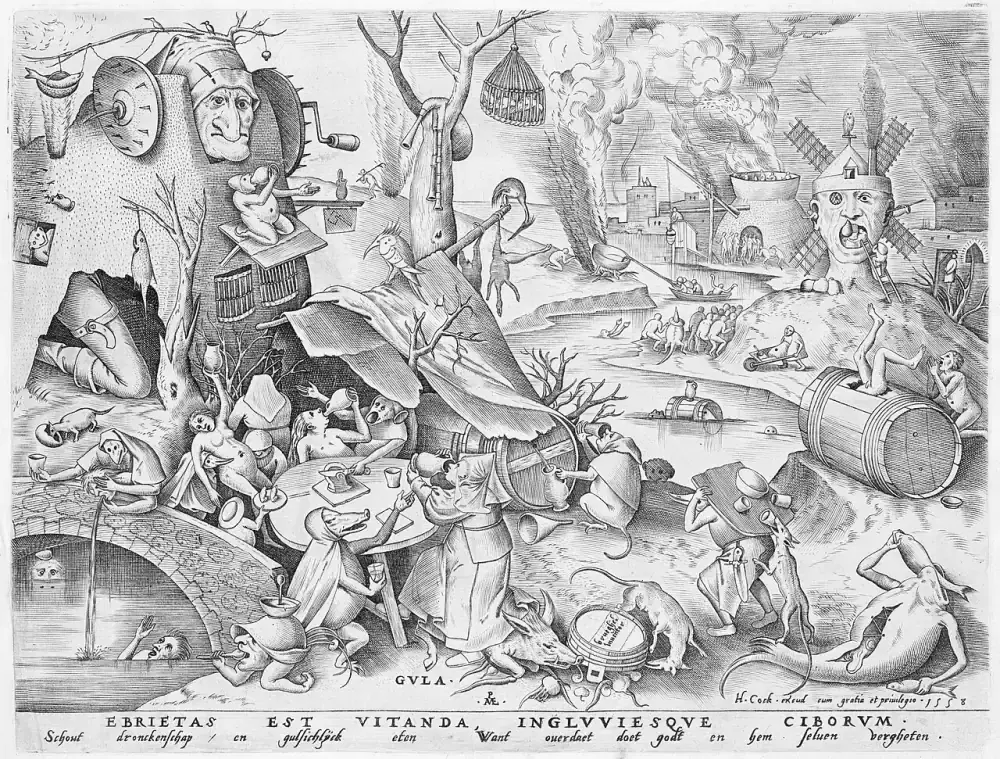
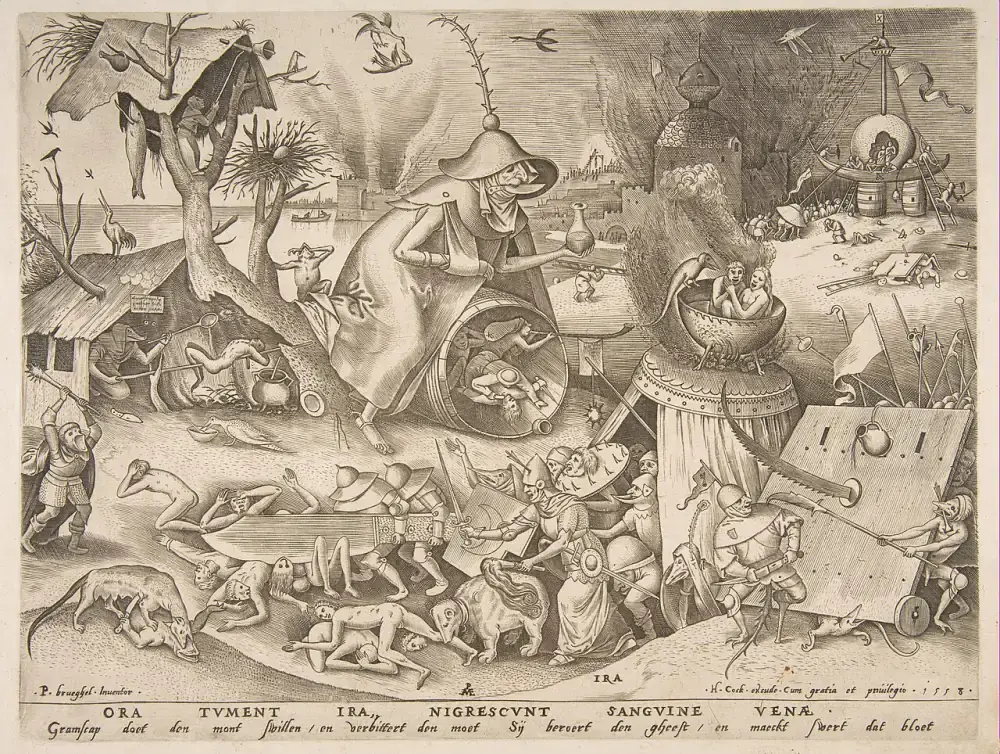
Pieter Bruegel the Elder gave each sin its own crowded print in 1558. Here a woman personifying pride stands at the centre, surrounded by figures acting it out.
All seven side by side, with Bosch's painting of the sins: the seven deadly sins in art.
How to work on pride
- Ask for feedback and thank people for it before you respond.
- Name one thing a day you learned from someone else.
- Let a small disagreement go without needing the last word.